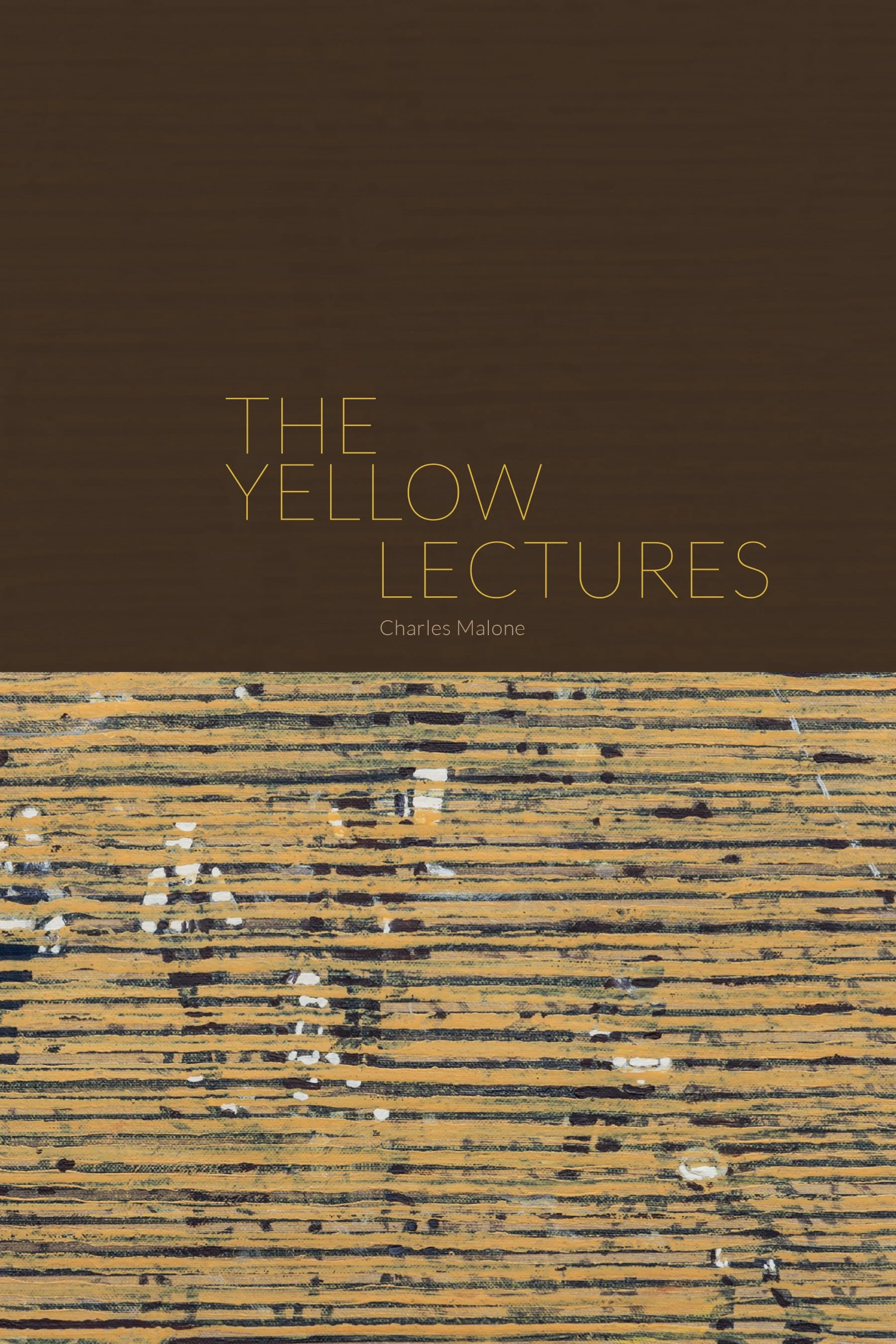
The Yellow Lectures is Charles’s fourth collection of poetry. The poems in The Yellow Lectures ask questions about teaching and learning. Specifically about the directions these processes flow and the pressures on these systems. These poems take interest in classroom communities and those existing outside of formal settings. They bring us into mental health recovery spaces and in proximity with incarcerated youth. Some of the poems aim to honor the people who challenge and inspire us. Others defend or critique the structures surrounding these complicated relationships. They nerd out on art and music and literature and Michael Jordan and all the good things people make. Our culture wars exist as a backdrop to these poems which are primarily interested in justice and beauty and embracing curiosity for all things and each other.
“From the classroom, to the river, to the juvenile detention center, The Yellow Lectures moves through places of learning and of schooling with tenderness, vulnerability, and defiant clarity. These poems consider the responsibilities of teacher, institution, and human, by asking the difficult question of how “to make each group / answerable / to the other.” Insistent and propulsive, with a trustworthy self-consciousness, The Yellow Lectures is its own syllabus, governed by attention toward what we owe one another and what obstacles we must tear down to best attend to those needs.”
—Carrie George, Author of Unbecoming
“The Yellow Lectures by Charlie Malone takes me back to the best writing workshops I’ve ever been a part of—that sacred communion among creatives, our intrepid leader showing us how to navigate a complex world with an array of provided tools: how to use empathy without judgment, righteousness without cynicism, tenderness without toxicity, and optimism without apology.
Straightaway, our shepherd-teacher-poet Charlie tells us yellow is the color of optimism. Yes. Absolutely. And these collected poems, then, are the flavor and texture of grace, of curiosity and wonder, of earnestness & experience, of wisdom & beautifully blooming forsythia. The privilege of reading these poems is akin to the privilege of being in that same classroom as the poet, engaging him in earthy one-on-one conversations—or being in his orbit as he nimbly extracts the best from his students, from onlookers, and from himself. The poems interrogate & invigorate & challenge & quench the thirst that curiosity gives to any learner—student or teacher. They are wonderful testaments to what it means to discover, prove, and improve, so that we may leave our desks, our classrooms, and our communities a little bit better than how we found them.”
—Bob King, Author of And & And, and And/or